A Day But No Atonement
“Save us and forgive our sins for the sake of Your name” (Psalm 79:9)
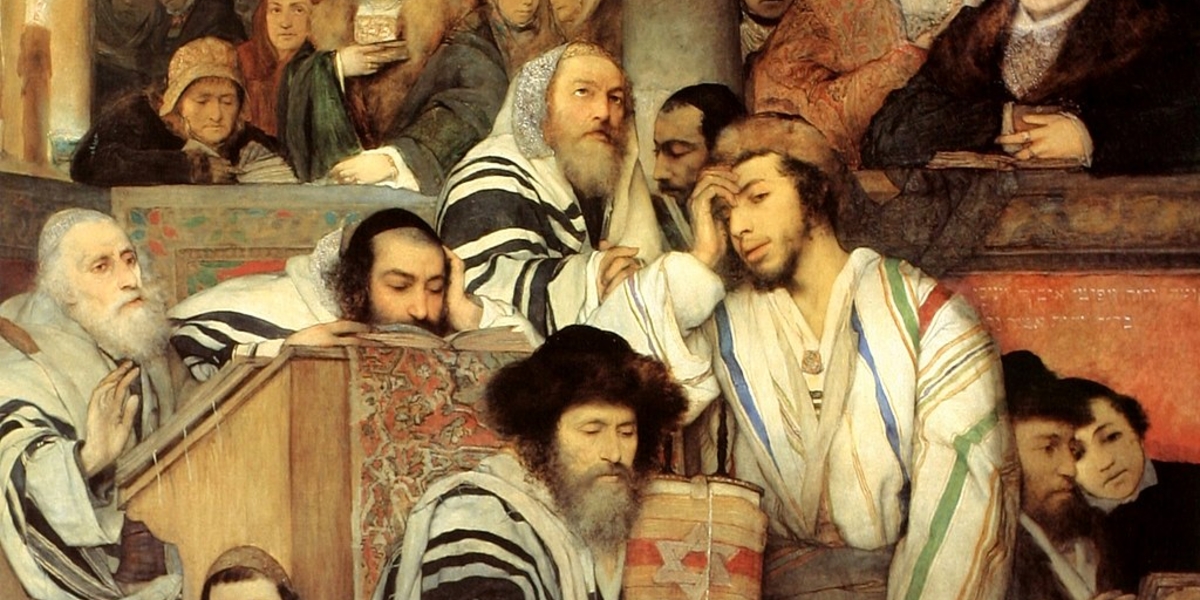
Clarity, truth and tradition. We need to unpack these essential elements if we want to know what Yom ha-Kippurim (or the Day of Atonements, as it is called in Hebrew in Leviticus 23:27) is all about. Five questions should be answered:
- What does the Bible teach about the holiday known as Yom ha-Kippurim?
- What does the biblical term ‘to be cut off’ mean in a Day of Atonements context?
- How have rabbinic teachings and traditions shaped Jewish understanding of Yom Kippur?
- How can Messianic believers relate to Yom ha-Kippurim in light of Messiah Yeshua?
- What’s the prophetic future for Yom ha-Kippurim?
A rabbinic Yom Kippur
Jewish perspectives on the Ten Days of Awe and the Day of Atonements go back to just after the Second Temple was destroyed by Imperial Rome. Hopes for its speedy rebuilding were not fulfilled. Rabbinic Judaism then ‘rebuilt itself,’ establishing non-biblical atonement ceremonies which were not based on Jerusalem-centered animal sacrifices. This massive religious restructuring eventually morphed into what is today called Orthodox Judaism – a step-child of Second Temple Judaism, and one which has departed from the atonement-based biblical foundations of Moses and Messiah Yeshua.
Rabbi Judah son of Shimon ben Gamliel II was born in 135 AD and grew up in the Western Galilee village of Usha. Circa 200 AD he is quoted as stating:
- “All are judged on New Year and the separate dooms are sealed each in its time. . . Man is judged on New Year and his doom is sealed on the Day of Atonements” (Babylonian Talmud [TB], Tractate Rosh Hashana 16 a).
Sixty-five years later (circa 265 AD) in the central Lower Galilee town of Sepphoris (Zippori), Rabbi Judah’s pupil Rabbi Yochanan bar Nappaha declared:
- “Three scrolls are opened (in heaven) on New Year, one for the thoroughly wicked, one for the thoroughly righteous, and one for the intermediate. The thoroughly righteous are forthwith inscribed definitively in the scroll of life. The thoroughly wicked are forthwith inscribed definitively in the scroll of death. The doom of the intermediate is suspended from New Year till the Day of Atonements. If they deserve well, they are inscribed in the scroll of life. If they do not deserve well, they are inscribed in the scroll of death” (TB, Tractate Rosh Hashana 16b).
Nearly one thousand years later still, the Mikra’ot Gedolot commentary on Leviticus quotes the explanation of Rambam (Rabbi Moshe ben Maimon or Maimonides) as to what he thought was the spiritual basis behind Judah’s and Yochanan's decisions. He stated:
- “Now Scripture did not explain the reason for this commandment – why [we must do] the blowing [of the horn], and why we need a memorial before God on this day more than on all other days, and why He commanded altogether that this day should be a holy convocation. But because this day comes at the beginning of the month in which the Day of Atonements occurs, it would appear that on the New Year there is a judgment before Him, blessed be He, for by these He judges the peoples: on the New Year He sits upon the throne as the righteous Judge, and afterwards in the course of the next ten days He forgives the transgression of His servants.”
Without biblical warrant, a whole new Judaism was created after the destruction of the Second Temple, and a novel understanding was given to both the Feast of Trumpets and Yom ha-Kippurim. The biblical New Year was moved from Aviv/Nisan in the Springtime to Eitanim/Tishrei in the Fall, and a new creation labeled the ‘Ten Days of Awe’ (the ‘yamim nora’im’) was fashioned, proclaiming that each Jew’s spiritual destiny is to be decided and written down once a year in either the Book of Life (nichtavin l’chayim) or the Book of Death (nichtavin l’mitah). These less-than-biblically based perspectives have been embraced by most Jewish people over the centuries.
Have a happy Yom Kippur!
There is only one verse in the entire Bible which mentions blowing a shofar on Yom ha-Kippurim, and it is in the Book of Leviticus. It’s part of a discussion concerning the Year of Jubilee (a joyous occasion) when, once every fifty years, each individual Israelite gets all his debts forgiven and his ‘spiritual bank account’ balanced:
- “And you shall sound the blast of a shofar on the tenth of the month of the seventh month. On the Day of Atonements you shall sound a shofar throughout all your land. You shall thus consecrate the fiftieth year and proclaim a release through the land to all its inhabitants. It shall be a jubilee for you, and each of you shall return to his own property, and each of you shall return to his family” (Leviticus 25:9-10).
Every fifty years the Day of Atonement ended with a shofar blast, declaring the wiping away of the nation’s and of the family’s fiscal debt. In Zechariah 3:1-9 YHVH wipes away the spiritual sins of all Israel on Yom ha-Kippurim, in the same way like He proclaims economic release and freedom to the whole people of Israel on the same day every semicentennial:
- “Then he showed me Joshua the High Priest standing before the Angel of YHVH, and Satan standing at his right to accuse him. And YHVH said to Satan, ‘YHVH rebuke you, Satan! Indeed, YHVH who has chosen Jerusalem rebuke you! Is this not a log snatched from the fire?’ Now Joshua was clothed in excrement-covered garments and was standing before the Angel. And He responded and said to those who were standing before him, saying, ‘Remove the excrement-covered garments from him.’ Again He said to him, ‘See, I have taken your guilt away from you and will clothe you with festive robes.’ Then I said, ‘Have them put a clean headband on his head.’ So they put the clean headband on his head and clothed him with garments, while the Angel of YHVH was standing by . . . Behold, I am going to engrave an inscription on it,’ declares YHVH of armies, ‘and I will remove the guilt of that land in one day.”
The national response of the Jewish people to this Jubilee removal of economic debt every 50th Yom ha-Kippurim was seen in their sober and thankful heart, filled with overflowing joy. The national gates of praise swung open as the entire Jewish people began preparations for the upcoming pilgrim feast of Sukkot, the Harvest Feast better known as ‘Tabernacles.’
The exchange-of-life principle
My dear friend Dr. Louis Goldberg (former Professor of Jewish Studies at Moody Bible Institute) often stressed that, at the heart of the sacrificial system in the Mosaic Covenant was something called ‘the exchange-of-life principle.’ When the High Priest would lay his hands on the live sacrificial animal, the sins of the guilty sacrificer would go (as it were) into the innocent animal, and the innocent life of the animal would be accredited to the one laying his hands on the sheep or goat – thus granting him atonement:
- “And he shall lay his hand on the head of the burnt offering, so that it may be accepted for him to make atonement [the Hebrew root is kaphar/ kippur] on his behalf” (Leviticus 1:4)
- “Then Aaron shall lay both of his hands on the head of the live goat, and confess over it all the wrongdoings of the sons of Israel and all their unlawful acts regarding all their sins. And he shall place them on the head of the goat and send it away into the wilderness by the hand of a man who stands ready” (Leviticus 16:21)
This principle was echoed by the Apostle Paul in reference to Messiah Yeshua’s atoning sacrifice:
- “He made Him who knew no sin to be sin in our behalf, so that we might become the righteousness of God in Him” (2 Corinthians 5:21)
Blood = body and soul
God’s perspective is that blood is what ties body and soul together. It symbolizes life. Indeed, without the existence of blood in the body, there is no life: “For the life of the flesh is in the blood, and I have given it to you on the altar to make atonement for your souls. For it is the blood by reason of the life that makes atonement . . . For as for the life of all flesh, its blood is identified with its life. Therefore, I said to the sons of Israel, ‘You are not to eat the blood of any flesh, for the life of all flesh is its blood; whoever eats it shall be cut off’” (Leviticus 17:11,14)
Blood has a special purpose in the Scriptures: It is to be used to honor God who has given us the gift of life. With God as our witness, blood is not to be eaten, but to be used to atone for human sins. According to the Bible, the eating of blood is a serious spiritual offense. YHVH says that the blood and the fat of the sacrifice – the most significant part which represents precious life – belong only to the God of Jacob, and to no other deity or creation (see also Exodus 13:2; Leviticus 17; 27:9,26). To take what God claims as His alone is to rob and plunder the Lord Himself.
- “And you are not to eat any blood, either of bird or animal, in any of your dwellings. Any person who eats any blood, that person shall also be cut off from his people” (Leviticus 7:26-27)
The Apostle Paul adds a New Covenant perspective here:
- “No, but I say that things which the Gentiles sacrifice, they sacrifice to demons and not to God. And I do not want you to become partners with demons. You cannot drink the cup of the Lord and the cup of demons; you cannot partake of the table of the Lord and the table of demons. Or do we provoke the Lord to jealousy? We are not stronger than He, are we? . . . Therefore, whoever eats the bread or drinks the cup of the Lord in an unworthy way, shall be guilty of the body and the blood of the Lord” (1 Corinthians 10:20-22, 27)
These concepts form part of the biblical background for Yom Ha-kippurim, the Day of Atonements.
To be cut off from one’s people
YHVH entrusted the rite of male circumcision on the eighth day after birth to Abraham in Genesis 17:14. Disobedience on this point entailed being cut off from the Abrahamic Covenant and from the Jewish people:
- “And every male among you who is eight days old shall be circumcised throughout your generations . . . So My covenant shall be in your flesh as an everlasting covenant. But as for an uncircumcised male, one who is not circumcised in the flesh of his foreskin, that person shall be cut off from his people. He has broken My covenant” (Genesis 17:12-14)
The Hebrew term karath used in Genesis 17 means ‘to cut down,’ ‘to cut off’ or ‘to destroy’. It has a secondary meaning ‘to cut’ (as in ‘to make a covenant’). When the term is used with the sense ‘to cut off,’ it can refer to one of three possible meanings:
- to be excommunicated by men on earth
- to be excommunicated eternally from God
- to be physically put to death directly by man or through God’s sovereign outworking
Excommunication from the Jewish nation is the punishment for not keeping Yom ha-Kippurim according to the rules of the Mosaic Covenant: “You shall afflict your souls … For any person who does not afflict his soul on that same day shall be cut off from his people” (Leviticus 23:26-29)
Excommunication from the Jewish nation is the punishment for eating blood: “I said to the sons of Israel, ‘You are not to eat the blood of any flesh, for the life of all flesh is its blood; whoever eats it shall be cut off’” (Leviticus 17:11, 14)
Excommunication from the Body of Messiah is the punishment for rejecting belief in the gospel: “See then the kindness and severity of God: to those who fell, severity, but to you, God’s kindness, if you continue in His kindness; for otherwise you too will be cut off” (Romans 11:22-23)
The following are 14 examples of activities which result in ‘being cut off,’ according to Moses:
- kidnapping and slavery (Exodus 21:16)
- premeditated murder (Exodus 21:12)
- violating the Shabbat (Exodus 31:14-16; see also Numbers 15:32-36)
- persistent/high-handed disobedience to God or to one’s parents (b’yad rama) (Leviticus 20:9; see also Numbers 15:30-31 and Deuteronomy 21:20-21)
- incest (Leviticus 20:11-14)
- homosexuality (Leviticus 20:13)
- bestiality (Leviticus 20:15-16)
- occult practices (Leviticus 20:27)
- blasphemy (Leviticus 24:16; see also 1 Kings 21:10)
- being a false prophet (Deuteronomy 13)
- idolatry (Deuteronomy 13:6-10)
- harlotry (Deuteronomy 22:21)
- adultery (Deuteronomy 22:22)
- adultery with an engaged woman (Deuteronomy 22:23-24)
Some of these above-listed judgments were capital offences, while other would involve exclusion from the Israelite community – either open-ended or limited in time (a ban). Numbers 27:14 refers to the rebellion at Kadesh, yet YHVH did not destroy Israel. Instead, His discipline entailed a national delay in entering the Promised Land – though most of that generation did die in the wilderness (Numbers 26:65). When the Mosaic Covenant allows no atoning sacrifice for sin, and yet God graciously does not cut our people off, there is definitely room for humble giving of thanks:
- “See then the kindness and severity of God: to those who fell, severity, but to you, God’s kindness, if you continue in His kindness; for otherwise you too will be cut off. And they also, if they do not continue in their unbelief, will be grafted in; for God is able to graft them in again. For if you were cut off from what is by nature a wild olive tree, and contrary to nature were grafted into a cultivated olive tree, how much more will these who are the natural branches be grafted into their own olive tree? For I do not want you, brothers and sisters, to be uninformed of this mystery – so that you will not be wise in your own estimation – that a partial hardening has happened to Israel until the fullness of the Gentiles has come in. And so all Israel will be saved; just as it is written: ‘The Deliverer will come from Zion. He will remove ungodliness from Jacob . . . This is My covenant with them, when I take away their sins.’ In relation to the gospel they are enemies on your account, but in relation to God’s choice they are beloved on account of the fathers – for the gifts and the calling of God are irrevocable” (Romans 11:22-29)
In 1 Corinthians 5:5 and 11:28-32 Paul points out how God can bring judgment on believers who highhandedly violate biblical commands. Though prosecutable evidence may escape human judges’ detection, God who sees everything will bring His justice about in His own time. The fear of the Lord is meant to have an effect on community behavior, so that all will know that YHVH will not tolerate hypocrisy and hidden sin in Israel’s private lives or in their public worship, praise and celebration (see Jude 1:12).
Messiah our Righteousness is cut off for the sake of His people
Yom ha-Kippurim ties the threat of ‘being cut off’ to each Jewish person’s heart attitude regarding God’s atonement. At the same time, the term ‘to be cut off’ is also used in connection with each Jewish person’s heart-attitude to Messiah Yeshua’s atoning work on behalf of His Jewish people:
- “Then after the sixty-two weeks, the Messiah will be cut off (Hebrew, yikaret) and have nothing, and the people of the prince who is to come will destroy the city and the sanctuary” (Daniel 9:26).
Isaiah adds a corresponding thought, using a similar Hebrew verb to karath (‘nigzar’): “By oppression and judgment He was taken away. And as for His generation, who considered that He was cut off from the land of the living for the wrongdoing of my people, to whom the blow was due?” (Isaiah 53:8).
God’s redemptive decision to ‘cut off’ the Messiah is the climax in the history of atonement!
- “But YHVH was pleased to crush Him, causing Him grief. If He renders Himself as a guilt offering, He will see His offspring, He will prolong His days, and the good pleasure of YHVH will prosper in His hand” (Isaiah 53:10)
- “Therefore, it was necessary for the copies of the things in the heavens to be cleansed with these things, but the heavenly things themselves with better sacrifices than these. For Messiah did not enter a holy place made by hands, a mere copy of the true one, but into heaven itself, now to appear in the presence of God for us. Nor was it that He would offer Himself often, as the high priest enters the Holy Place year by year with blood that is not his own. Otherwise, He would have needed to suffer often since the foundation of the world. But now once at the consummation of the ages He has been revealed to put away sin by the sacrifice of Himself. And just as it is destined for people to die once, and after this comes judgment, so Messiah also, having been offered once to bear the sins of many, will appear a second time for salvation without reference to sin, to those who eagerly await Him” (Hebrews 9:23-28)
- “But you have come to Mount Zion and to the city of the living God, the heavenly Jerusalem, and to myriads of angels, to the general assembly and congregation of the firstborn who are enrolled in heaven, and to God, the Judge of all, and to the spirits of the righteous made perfect, and to Yeshua, the mediator of a New Covenant, and to the sprinkled blood, which speaks better than the blood of Abel” (Hebrews 12:22-24)
- “But when Messiah appeared as a high priest of the good things having come, He entered through the greater and more perfect tabernacle, not made by hands, that is, not of this creation; and not through the blood of goats and calves, but through His own blood, He entered the Holy Place once for all time, having obtained eternal redemption. For if the blood of goats and bulls, and the ashes of a heifer sprinkling those who have been defiled, sanctify for the cleansing of the flesh, how much more will the blood of Messiah, who through the eternal Spirit offered Himself without blemish to God, cleanse your conscience from dead works to serve the living God?” (Hebrews 9:11-14)
Divine thunder
The Bible connects trumpets and shofars to some powerful contexts – past, present and future. The fear-inspiring voice of the God of Israel sounded like a shofar:
- “So it came about on the third day, when it was morning, that there were thunder and lightning flashes and a thick cloud upon the mountain and a very loud trumpet sound, so that all the people who were in the camp trembled. And Moses brought the people out of the camp to meet God, and they stood at the foot of the mountain. Now Mount Sinai was all in smoke because YHVH descended upon it in fire. And its smoke ascended like the smoke of a furnace, and the whole mountain quaked violently. When the sound of the trumpet grew louder and louder, Moses spoke and God answered him with thunder. YHVH came down on Mount Sinai, to the top of the mountain, and YHVH called Moses to the top of the mountain, and Moses went up. Then YHVH spoke to Moses, ‘Go down, warn the people, so that they do not break through to YHVH to gaze, and many of them perish’” (Exodus 19:16-21)
God’s shofar-like voice was unbearable in power – “The blast of a trumpet and the sound of words which sound was such that those who heard begged that no further word be spoken to them” (Hebrews 12:19)
The Scriptures tell us that the God of Jacob rides upon the highest heavens. He rides on the clouds of heaven and through the desert. He rides on the cherubim: “YHVH of armies, God of Israel, who is enthroned above the cherubim – You are the God, You alone, of all the kingdoms of the earth. You made heaven and earth” (2 Kings 19:15)
In Moses’ Tent of Meeting and Solomon’s Temple, YHVH’s manifest presence hovered or rode above the two cherubim (Psalm 80:1), those golden representations of angels (see Genesis 3:24) who stand before God’s presence at all times:
- “Then the cloud covered the tent of meeting, and the Glory of YHVH filled the Tabernacle. And Moses was not able to enter the Tent of Meeting because the cloud had settled on it, and the Glory of YHVH filled the Tabernacle” (Exodus 40:34-35)
- “Now when Solomon had finished praying, fire came down from heaven and consumed the burnt offering and the sacrifices, and the Glory of YHVH filled the House. And the priests could not enter the House of YHVH because the Glory of YHVH filled YHVH’s House. All the sons of Israel, seeing the fire come down and the Glory of YHVH upon the House, bowed down on the pavement with their faces to the ground, and they worshiped and gave praise to YHVH” (2 Chronicles 7:1-3; see also 2 Chronicles 5:11-14)
- “Yet You are holy – You who are enthroned upon the praises of Israel!” (Psalm 22:3)
In the Holy of Holies, on Yom ha-Kippurim, the God of Jacob would actually appear to Aaron (Exodus 30:10; Leviticus 16) and later to the High Priest (both descended through Levi), manifesting His Glory above the gold-covered sacred chest known in Hebrew as the kapōret or place of atonement (translated into Greek as hilastērion – i.e., to appease or make favorable; and into Latin as propriatorium – i.e., a place of reconciling or atoning).
- “Then you shall put the kapōret on top of the Ark. And in the Ark, you shall put the testimony which I will give to you. There I will meet with you. And from above the kapōret, from between the two cherubim which are upon the ark of the testimony, I will speak to you about every commandment that I will give you for the sons of Israel” (Exodus 25:21-22)
- “Now when Moses entered the tent of meeting to speak with Him, he heard the Voice speaking to him from above the kapōret that was on the ark of the testimony, from between the two cherubim. So He spoke to him” (Numbers 7:89)
A prophetic future for Yom ha-Kippurim
In Zechariah 3:9, in the Holy of Holies on Yom Ha-Kippurim, YHVH of armies prophesies to Joshua the High Priest in the days of Zechariah the prophet. The God of Jacob announces that, in the same way as He takes away all debts from Israel on every 50th Day of Atonements, so will He “will remove the guilt of that [Israeli] land in one [future] day.”
At the very close of his biblical book, the prophet Micah also speaks of what YHVH will do on that Day of Atonements: “He will again have compassion on us. He will trample on our wrongdoings. You will cast all their sins into the depths of the sea! (Micah 7:19)
Jeremiah adds his seer’s voice to the prophetic choir:
- “They will not teach again, each one his neighbor and each one his brother, saying, ‘Know YHVH,’ for they will all know Me, from the least of them to the greatest of them, declares YHVH, for I will forgive their wrongdoing, and their sin I will no longer remember.” (Jeremiah 31:34)
- “In those days and at that time, declares YHVH, search will be made for the wrongdoing of Israel, but there will be none; and for the sins of Judah, but they will not be found; for I will forgive those whom I leave as a remnant” (Jeremiah 50:20)
Other prophets of Israel and Judah stress the prophetic reality that the restored Jewish people will be celebrating the following Jewish calendar feasts after their Final Return from Exile: YHVH’s appointed feasts, New Moon celebrations, weekly Shabbatot, etc. (Isaiah 33:20; Isaiah 66:23; Nahum 1:15; Ezekiel 36:38; Ezekiel 44:24; Ezekiel 45:17). Amazing days lie ahead of us!
How can Messianic believers relate to Yom Kippur?
Clearly, we who believe in Yeshua are under the New Covenant; our atonement is through Messiah. We are not looking for our names to be inscribed once yearly in heavenly books, for as Messiah Yeshua said: “Nevertheless, do not rejoice in this, that the spirits are subject to you, but rejoice that your names are recorded in heaven” (Luke 10:20).
- “Now at that time Michael, the great prince who stands guard over the sons of your people, will arise. And there will be a time of distress such as never occurred since there was a nation until that time. And at that time your people, everyone who is found written in the book, will be rescued” (Daniel 12:1)
If we choose to fast and to humble our souls, it is not for the purpose of avoiding the God of Jacob’s punishment: it is in intercession for our beloved Jewish people, that they would turn to Messiah Yeshua and receive His atonement – and not that our fasting would atone for our sins. These have already been atoned for by Yeshua.
- “But as for you, when you fast, anoint your head and wash your face, so that your fasting will not be noticed by people but by your Father who is in secret. And your Father who sees what is done in secret will reward you” (Matthew 6:17-18).
It may be of interest to note that the Apostle Paul seems to have kept the fast on Yom ha-Kippurim: “When considerable time had passed and the voyage was now dangerous, since even the Fast was already over” (Acts 27:9).
We who follow Messiah are called to confess our sins before God on a daily basis, and to experience our personal Yom ha-Kippurim each day, as the blood of Messiah Yeshua cleanses us from all sin:
- “This is the message we have heard from Him and announce to you, that God is Light, and in Him there is no darkness at all. If we say that we have fellowship with Him and yet walk in the darkness, we lie and do not practice the truth; but if we walk in the Light as He Himself is in the Light, we have fellowship with one another, and the blood of Yeshua His Son cleanses us from all sin. If we say that we have no sin, we are deceiving ourselves and the truth is not in us. If we confess our sins, He is faithful and righteous, so that He will forgive us our sins and cleanse us from all unrighteousness. If we say that we have not sinned, we make Him a liar and His word is not in us” (1 John 1:5-10).
As Yom ha-Kippurim draws near, it encourages our souls to remember all these shofar-related events. The shofar gives voice to our praise and to our intercession. It accompanies our request for God to remember Israel in times of war (Numbers 10:9) and to grace our spiritual gatherings with His amazing presence (Numbers 10:7). The shofar blast is His clarion call to the Jewish people, emphasizing that YHVH never forgets a promise.
How shall we then pray?
- Pray for Jewish people to receive visitations and revelation about Messiah Yeshua our Atonement during this season
- Pray for the raising up of Ezekiel’s prophetic Jewish army throughout the earth!
Your prayers and support hold up our arms and are the very practical enablement of God to us in the work He has called us to do.
In Messiah Yeshua,
Avner Boskey
Donations can be sent to:
FINAL FRONTIER MINISTRIES
BOX 121971 NASHVILLE TN 37212-1971 USA
To donate online visit: http://www.davidstent.org/give